Protected on Paper
The nest is intact, for now. The home range is not. What happens when you protect the bedroom but demolish everything else.

Field season is in full swing, and what we found in Freeman Creek Grove stopped us cold.
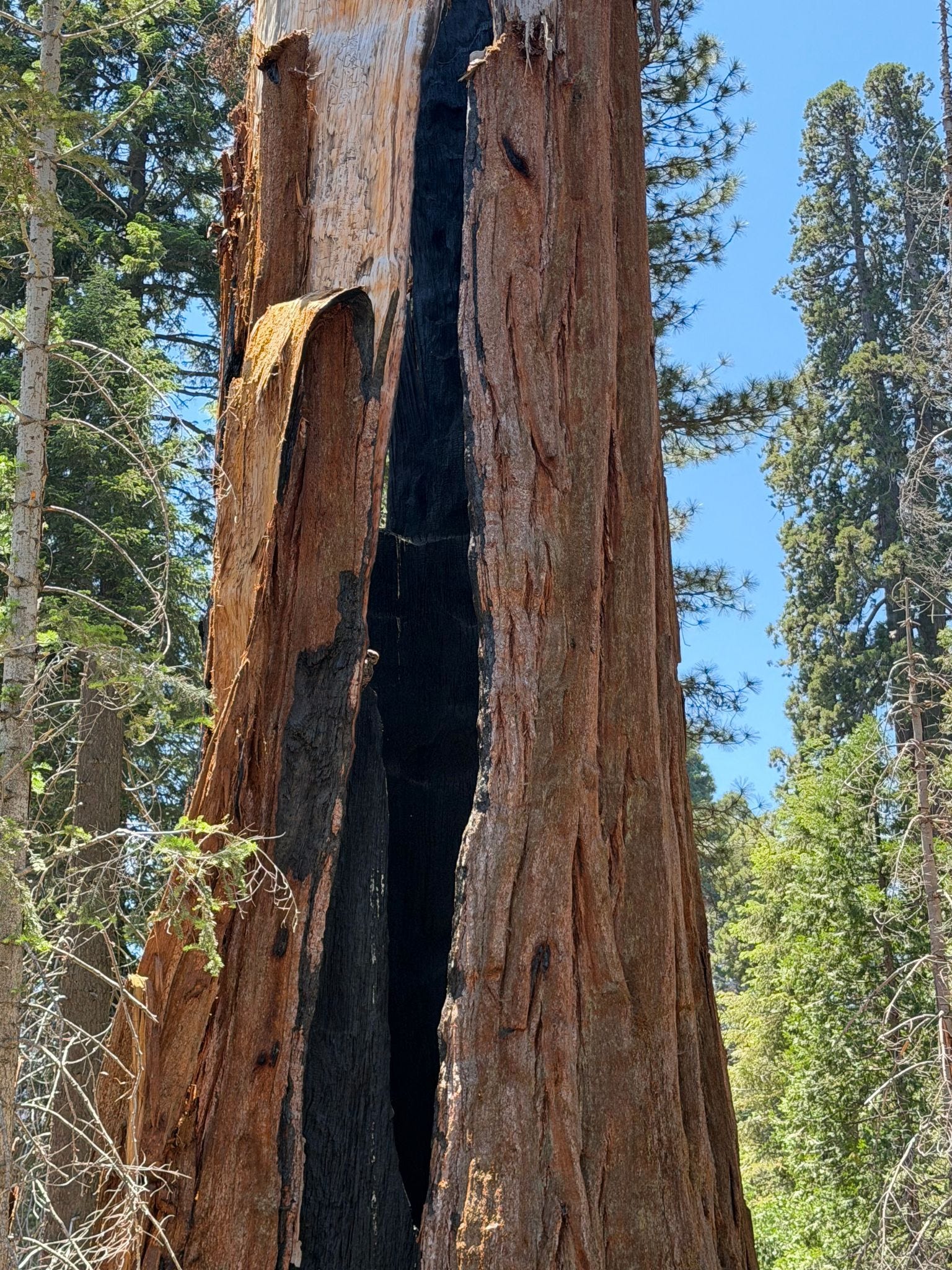
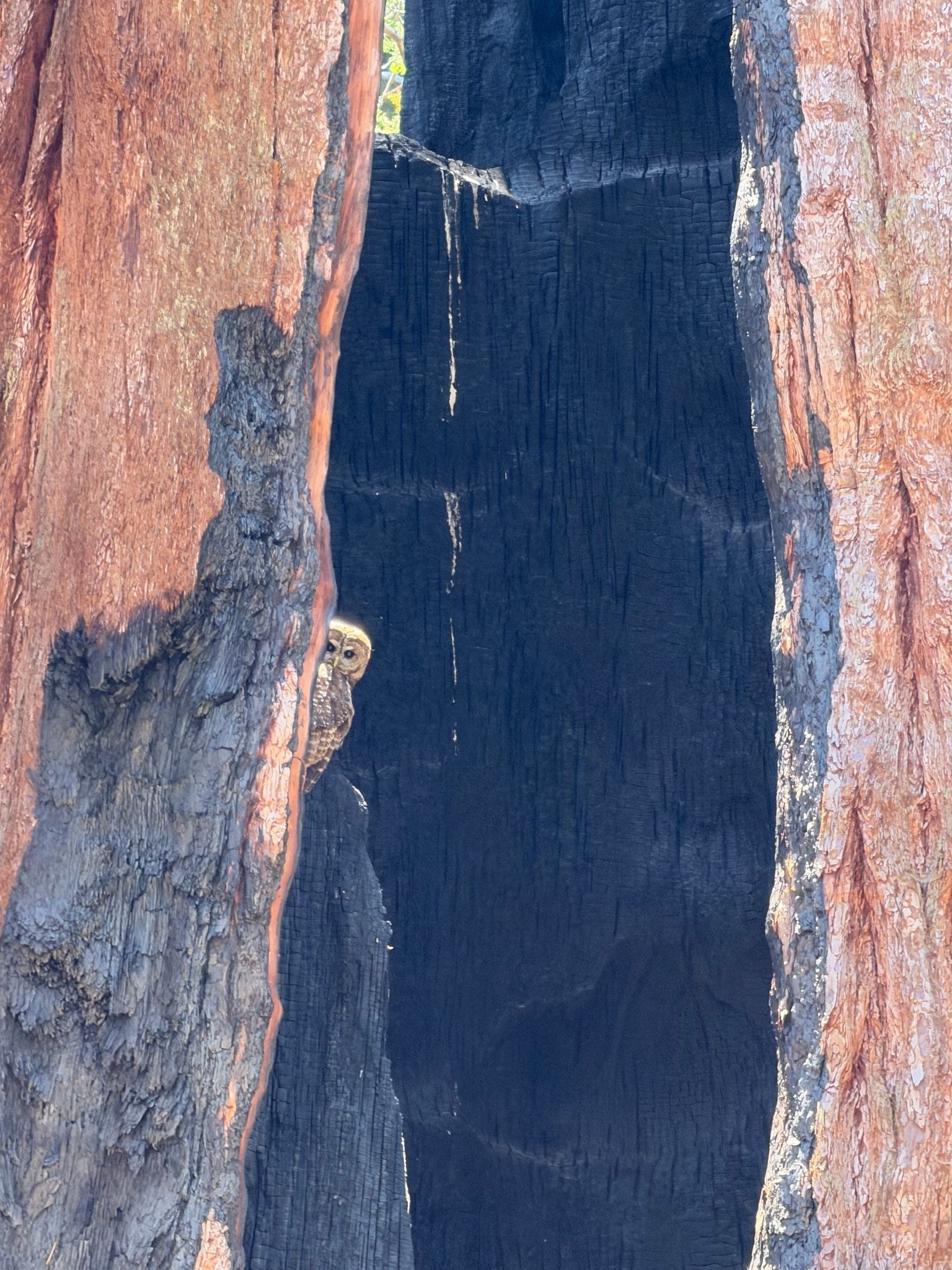
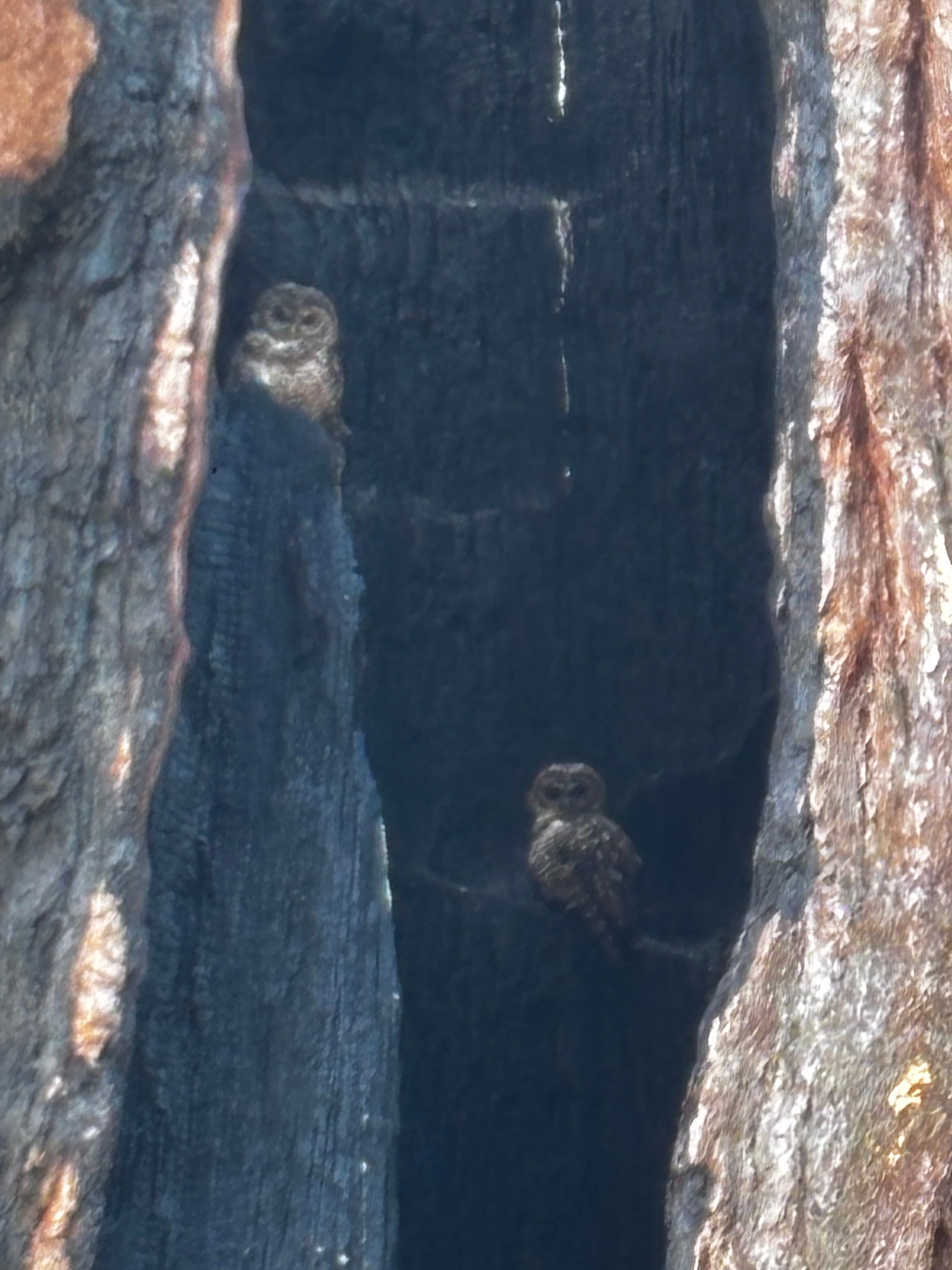
Inside a giant sequoia snag — a standing dead tree that spotted owls depend on for nesting — we found a pair. Two spotted owls, same hollow, two days running. We think we know what that means: an active nest tree
We notified the Forest Service. The tree is tagged, meaning the agency already knows it exists. What followed was silence: no Protected Activity Center established, no enforcement of the buffers that federal protocol requires.
Here is what those protections are supposed to look like. Around a spotted owl nest tree, the Forest Service is required to establish a Protected Activity Center, or PAC, a core buffer representing the heart of the nest area. Beyond that sits the Home Range Core Area, or HRCA, a 700-acre radius meant to represent 30 to 50 percent of the owl’s total home range of 2,000 to 3,000 acres. The HRCA carries a Limited Operating Period from March 1st through August 31st, the full arc of nesting season, during which logging is prohibited.
Last summer and fall the Forest Service logged inside the required quarter mile buffer, coming within 300 feet of the nest tree itself.
The logging hasn’t touched the nest tree. Not yet. But it doesn’t need to. Strip away the hunting ground, compromise both parents’ ability to feed themselves and their chicks, and the nest becomes a tomb. A nesting pair cannot relocate. They are committed to that hollow until the chicks fledge or don’t. Imagine having a newborn but being locked out of everything beyond the bedroom door: the kitchen, the grocery store, the world the baby depends on you to navigate. That is what logging the home range core area means for a nesting spotted owl pair.
As early as July 1st, days from now, it could happen again.
This is not an accident. It is a pattern.
The spotted owls in that sequoia snag don’t know any of this. They know the hollow, the grove, the fire-adapted forest they depend on. Freeman Creek is giant sequoia country: a landscape shaped by fire, especially high-intensity fire, ecologically rich precisely because of it, and now threatened by the same forest resilience logging framework spreading across California like a franchise.
We have filed suit in other sequoia groves and are prepared to fight here too. We are in the field documenting what is at stake, and that work has real costs. Getting to these remote groves takes time, transportation, food, and boots on the ground. We are asking you to help us stay there.
Every contribution this summer helps cover the fieldwork that makes this documentation possible, and comes with something in the mail, a small thank-you we think you’ll want to hold onto.
The owls are nesting. The clock is running. We need to be there.